E
Guest
- Thread Author
- #1
A sure sign of unseasonably dry weather? The Minnesota Horticultural Society has been flooded with calls about watering, so let’s dig in.
Nah. Outdoor plants will be quite happy to get whatever water they can get during extended dry periods. Any chlorine or other chemical presence in the water will quickly dissipate outdoors.
Remember: water infrequently and deeply. For my perennials, I like to set up a sprinkler and set a timer for at least a half-hour, at most once a week during dry spells. Those plants are tougher than you think! Vegetables are a little more persnickety than perennials, and the regular water is more critical for them. For this reason, I installed a drip irrigation system for my vegetable beds several years ago, and I love it.

Line a drip irrigation hose strategically through your planters and in-ground beds

It’s a lot of up-front work! But completely worth it in the end
You want to aim for about one inch of water per week—and that’s a combination of whatever rain you get plus watering. If you’re not sure how much water you’re actually using, try putting a plastic container on the ground and seeing how long it takes to get 1” of water standing in it when it’s under the sprinkler. Don’t forget to put up a rain gauge in your yard so you also know exactly how much rain you received—you might be off the hook for watering that week.
Watering in the morning is best; evening is second best. Watering when it’s very windy is a waste of time, and watering during the middle of a sunny day could actually damage your plants through sunscald.
If you want to make your turfgrass more drought-resilient, raise the height of your mower blade to 3.5 or 4 inches. Slightly taller grass will shade its own roots and stay green much longer.
An important note about houseplants: they are more sensitive. They don’t have access to any nutrients outside their pots and are subject to any buildup of chemicals from city water. I water my houseplants with rain water during the summer and purified or distilled water in the winter. My houseplant death rate dropped dramatically when I made this switch several years ago.
There can be no doubt that plants really live their best lives when they are provided with rain water, so why not consider adding a rain barrel under one of your downspouts? In a small yard, it effectively doubles each rain event by providing many more gallons of rainwater that you can use later.

A rain barrel setup like this gives you an opportunity to collect rare summer rain and use its nutrients to water your trees or flower and perennial gardens on a nice, sunny morning.
Current U of MN recommendations say you should not use rain barrel water on your vegetable gardens, however. Birds and squirrels regularly defecate on your roof, and rain washes all those feces into your rain barrel, where the bacteria has a nice warm and wet environment in which to thrive. Additionally, depending on the material and age of your shingles, various chemicals can also wash down those downspouts and into your barrels. But trees, shrubs, and perennials all benefit greatly from rain barrel water.
My favorite way to water trees and shrubs from the barrel is to hook up a hose to it and let the barrel water run out onto the ground. If I move the hose every 10-15 minutes, I can water several shrubs and trees this way.
Gardening questions? Ask a Master Gardener via our online form, or call the yard and garden line at (612) 301-7590.
Other helpful resources:
Yard & Garden Home
The Master Gardener Volunteer program
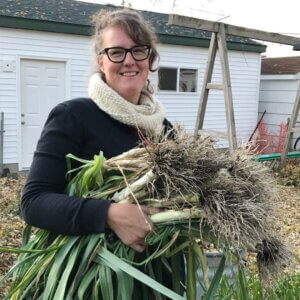
Jennifer Rensenbrink is a University of Minnesota Extension Master Gardener Volunteer for Hennepin County. She somehow has two mini-prairies on her tiny south Minneapolis property.
@jenniferrensenbrink
Photo credit: Jennifer Rensenbrink.
Four seasonal issues full of growing tips and featured gardens—written and edited by local northern gardening pros just for you.
subscribe
The post Ask a Master Gardener: What’s the Best Type of Water to Use in a Drought? appeared first on Northern Gardener.
Question: Are perennials and trees affected by being watered with city water vs rainwater when we have dry periods?
Answer:
Nah. Outdoor plants will be quite happy to get whatever water they can get during extended dry periods. Any chlorine or other chemical presence in the water will quickly dissipate outdoors.
Remember: water infrequently and deeply. For my perennials, I like to set up a sprinkler and set a timer for at least a half-hour, at most once a week during dry spells. Those plants are tougher than you think! Vegetables are a little more persnickety than perennials, and the regular water is more critical for them. For this reason, I installed a drip irrigation system for my vegetable beds several years ago, and I love it.
Line a drip irrigation hose strategically through your planters and in-ground beds
It’s a lot of up-front work! But completely worth it in the end
You want to aim for about one inch of water per week—and that’s a combination of whatever rain you get plus watering. If you’re not sure how much water you’re actually using, try putting a plastic container on the ground and seeing how long it takes to get 1” of water standing in it when it’s under the sprinkler. Don’t forget to put up a rain gauge in your yard so you also know exactly how much rain you received—you might be off the hook for watering that week.
Watering in the morning is best; evening is second best. Watering when it’s very windy is a waste of time, and watering during the middle of a sunny day could actually damage your plants through sunscald.
If you want to make your turfgrass more drought-resilient, raise the height of your mower blade to 3.5 or 4 inches. Slightly taller grass will shade its own roots and stay green much longer.
An important note about houseplants: they are more sensitive. They don’t have access to any nutrients outside their pots and are subject to any buildup of chemicals from city water. I water my houseplants with rain water during the summer and purified or distilled water in the winter. My houseplant death rate dropped dramatically when I made this switch several years ago.
There can be no doubt that plants really live their best lives when they are provided with rain water, so why not consider adding a rain barrel under one of your downspouts? In a small yard, it effectively doubles each rain event by providing many more gallons of rainwater that you can use later.
A rain barrel setup like this gives you an opportunity to collect rare summer rain and use its nutrients to water your trees or flower and perennial gardens on a nice, sunny morning.
Current U of MN recommendations say you should not use rain barrel water on your vegetable gardens, however. Birds and squirrels regularly defecate on your roof, and rain washes all those feces into your rain barrel, where the bacteria has a nice warm and wet environment in which to thrive. Additionally, depending on the material and age of your shingles, various chemicals can also wash down those downspouts and into your barrels. But trees, shrubs, and perennials all benefit greatly from rain barrel water.
My favorite way to water trees and shrubs from the barrel is to hook up a hose to it and let the barrel water run out onto the ground. If I move the hose every 10-15 minutes, I can water several shrubs and trees this way.
Gardening questions? Ask a Master Gardener via our online form, or call the yard and garden line at (612) 301-7590.
Other helpful resources:
Yard & Garden Home
The Master Gardener Volunteer program
Jennifer Rensenbrink is a University of Minnesota Extension Master Gardener Volunteer for Hennepin County. She somehow has two mini-prairies on her tiny south Minneapolis property.
@jenniferrensenbrink
Photo credit: Jennifer Rensenbrink.
LIKE THIS BLOG?
Learn more in Northern Gardener® magazine…
Four seasonal issues full of growing tips and featured gardens—written and edited by local northern gardening pros just for you.
subscribe
The post Ask a Master Gardener: What’s the Best Type of Water to Use in a Drought? appeared first on Northern Gardener.