S
Sara & Cesar
Guest
- Thread Author
- #1
Nature's intricate designs often reflect mathematical principles, particularly in the structure of flowers. Two prominent patterns observed are floral symmetry and the Fibonacci sequence, both contributing to the efficiency and beauty of plant growth.
Flower petals are modified leaves that protect reproductive organs and attract pollinators. Most flowers exhibit some form of symmetry, usually radial or bilateral symmetry: Less common are spiral symmetry, spherical symmetry and assymetry.
Radial Symmetry: Petals radiate uniformly from a central point, as seen in buttercups, allowing pollinators to approach from any angle.

Black-eyed Susan (Rudbeckia hirta)
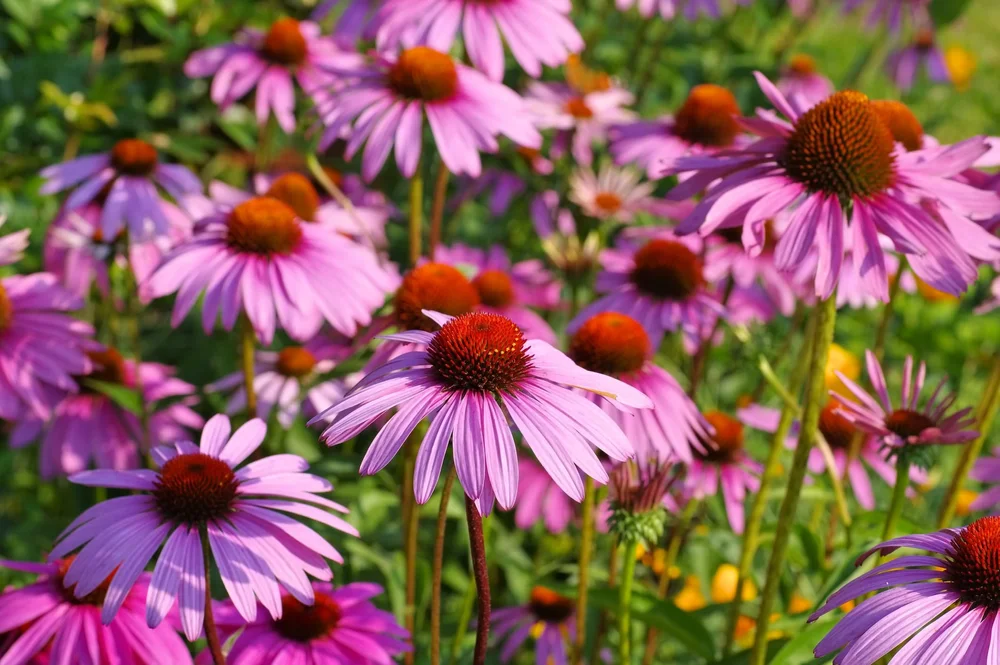
Purple Coneflower (Echinacea purpurea)

Wild Geranium (Geranium maculatum)

Mountain Laurel (Kalmia latifolia)

Carolina Rose (Rosa carolina)
Bilateral Symmetry: Petals are arranged such that the flower can be divided into mirror-image halves along a single plane.

Common Blue Violet (Viola sororia)

Jewelweed / Touch-me-not (Impatiens capensis)
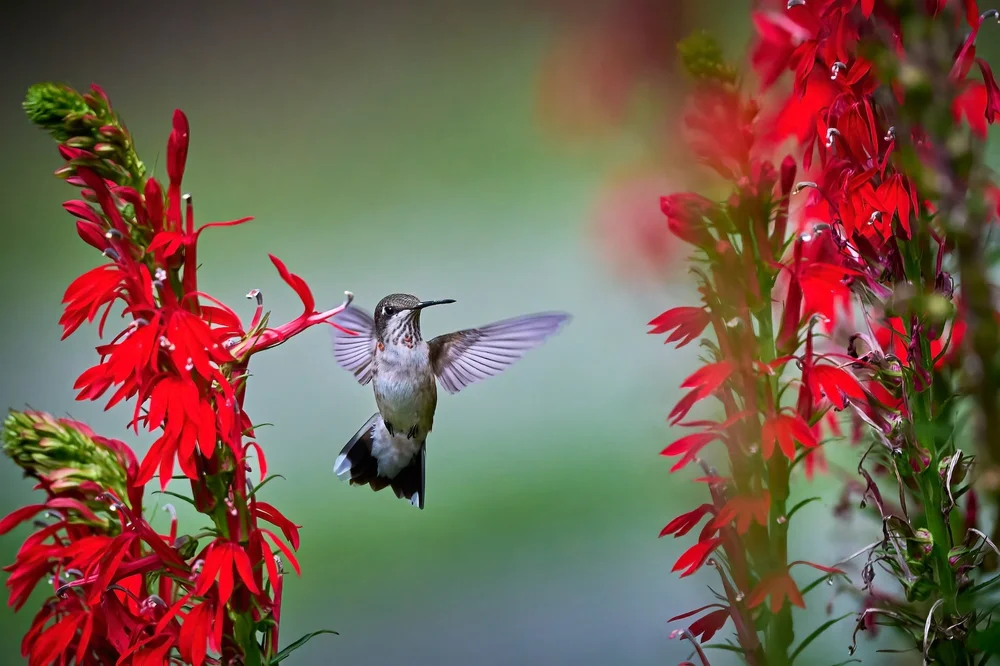
Cardinal Flower (Lobelia cardinalis)

Purple Nettle (Lamium purpureum)

Eastern Redbud (Cercis canadensis)
Spherical Symmetry
This type of symmetry occurs when an organism or structure is symmetrical around a central point in all directions, resulting in a sphere-like shape. Rare in plants, it's more common in microscopic organisms, fungi, and aquatic species.
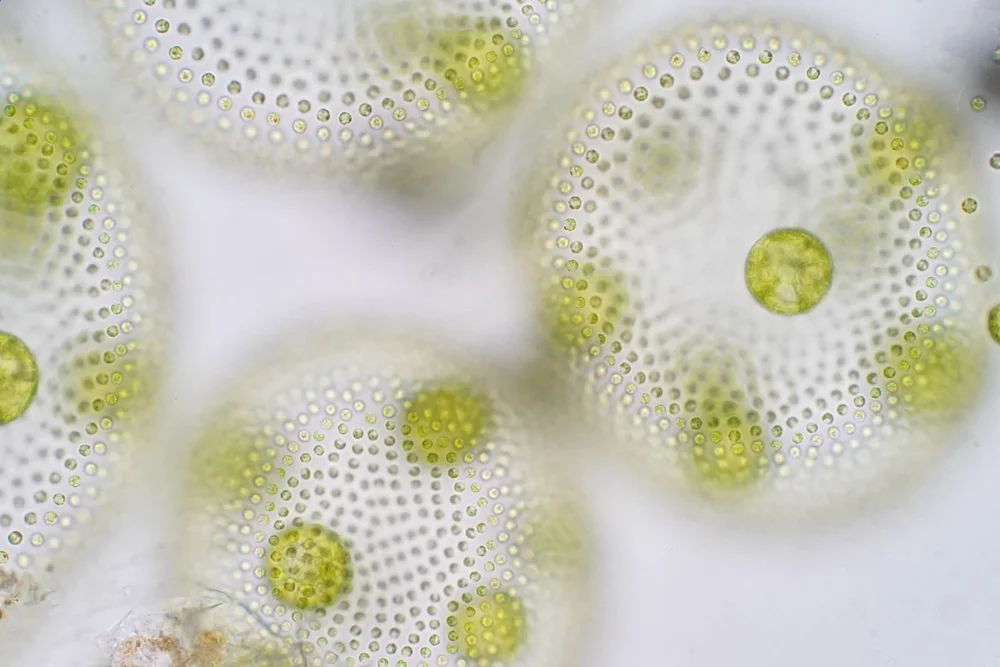
Green Algea (Volvox)

Puffball (Lycoperdon perlatum)
Spiral Symmetry (Helical Symmetry)
Seen frequently in plant growth, spiral symmetry features repeated elements arranged in a spiral around a central axis.
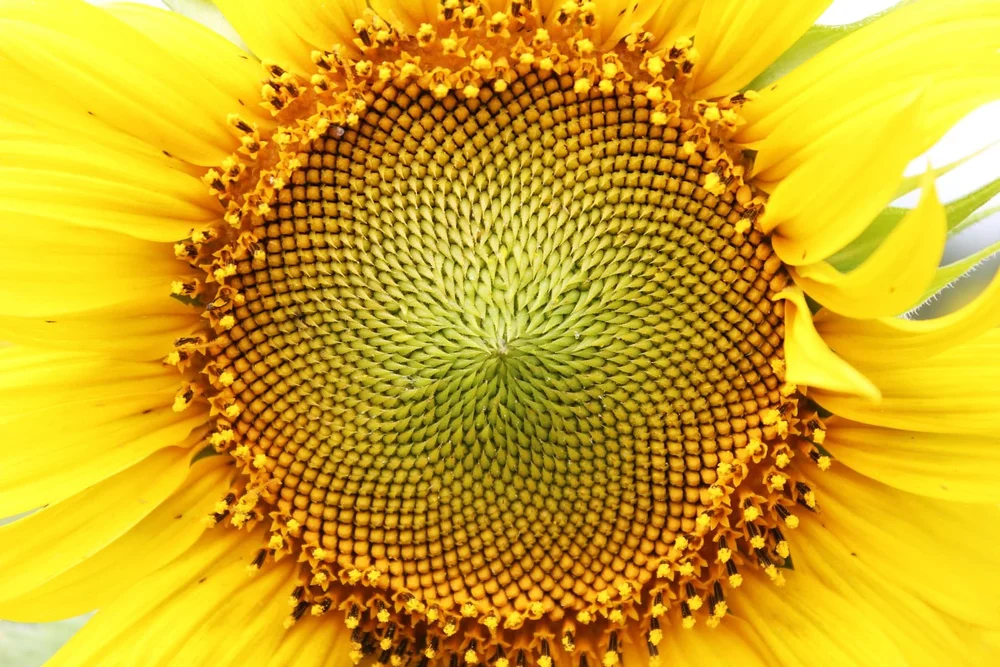
Sunflower seed heads (Helianthus annuus)

Spiral aloe (Aloe polyphylla)
Asymmetry
Some plants or flowers display no distinct symmetry, appearing irregular or uniquely shaped. Some almost look bilaterally symmetrical, but have a definite right/left hand sort of quality, where one side is dominant.

Jack-in-the-Pulpit (Arisaema triphyllum)
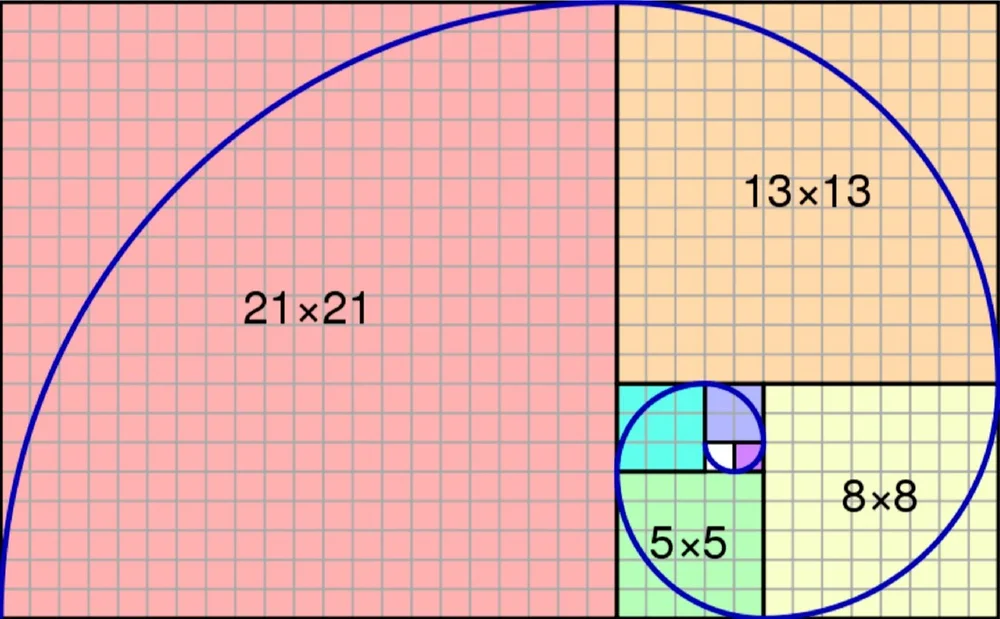
First written about in 6th century India, the Fibonacci sequence has powerful applications in nature. The Fibonacci sequence, a series where each number is the sum of the two preceding ones (0, 1, 1, 2, 3, 5, 8, 13, ...), is prevalent in various natural phenomena, especially in the arrangement of plant structures.
When you graph this pattern you get something called a golden spiral, which is formed by the golden ratio- dividing one fibonacci number by the previous one. It can be seen in plants, shells, snails, genetics, storm pattern, galaxies… all kinds of places.
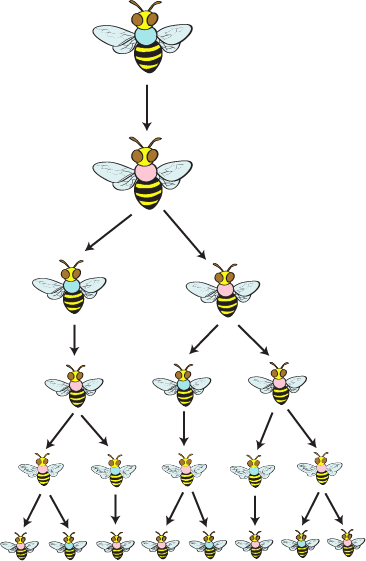
The family tree of a male bee
The pattern also appears in the family tree of bees. An unfertilized egg hatches into a male bee, while a fertilized egg hatches into a female bee. So a male bee has 1 parent, 2 grandparents, 3 great-grandparents, 5 great-great-grandparents etc.
It also appears in how humans inherit the female X chromosome, but that explanation is too complex for this post.
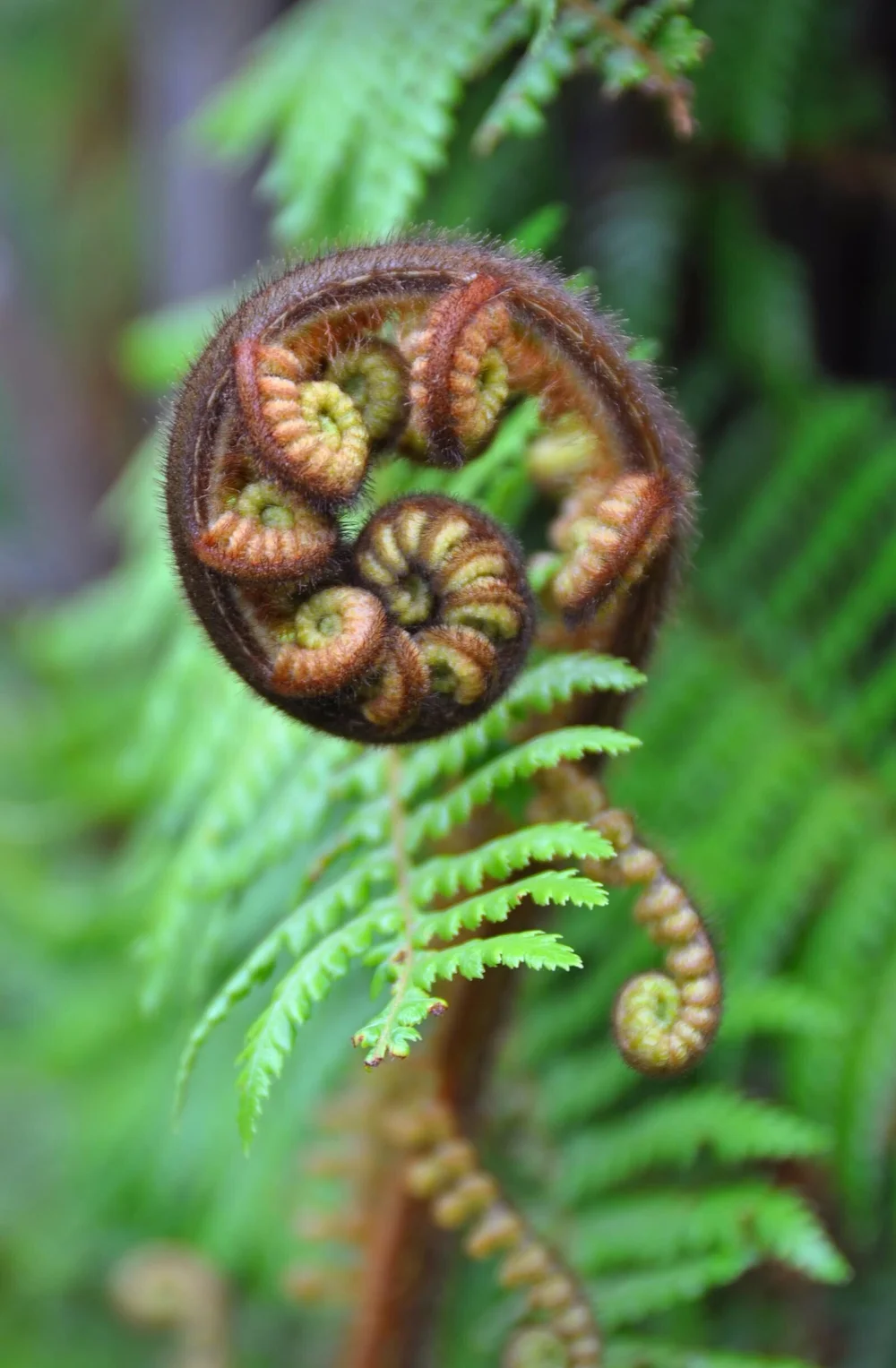
The emerging fronds of a silver fern (Alsophila dealbata)
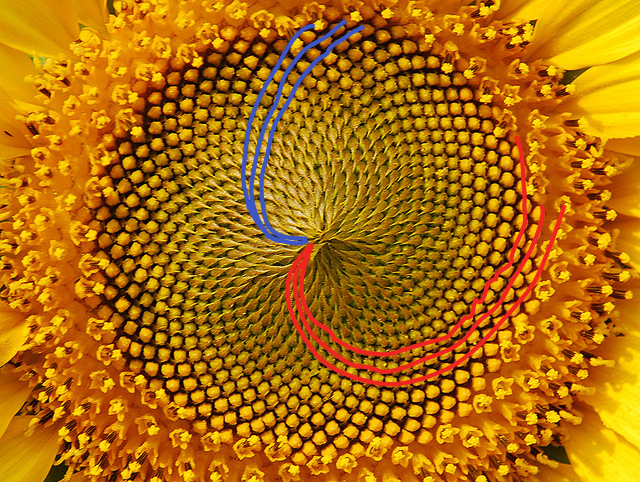
In plants, this pattern usually reflects the most efficient way for it to grow, as can be seen with the tightly packed seeds of this sunflower. It allows seeds to pack into any given space in the tightest possible formation.
34 blue spirals veer from the center towards the right, while 55 red spirals veer to the left. To ensure that the maximum amount of seeds fills the space, each seed grows at about 137.5 degree angle from the last. That irregular angle places each seed in a way that naturally forms these spirals.
Many flowers exhibit petal counts corresponding to Fibonacci numbers: lilies have 3 petals, wild roses have 5, and daisies commonly have 34 or 55 petals, combining aesthetic harmony with pollinator attraction.
Scan of the month shows some amazing details of foods like pomegranate and broccoli, allowing you to see some great mathematical patterns in plants and fungi.
Newsletter Block This newsletter signup form needs a storage option. Edit the block and enter a storage location via the Storage tab.
All about the ingenuity of plants, details on our new collections, and the occasional deal.
Email Address Sign Up
Thank you! We may not send a newsletter for a few months, we try to keep to a quarterly schedule. Each newsletter will contain information about plants as well as our latest jewelry designs.
Flower petals are modified leaves that protect reproductive organs and attract pollinators. Most flowers exhibit some form of symmetry, usually radial or bilateral symmetry: Less common are spiral symmetry, spherical symmetry and assymetry.
Radial Symmetry: Petals radiate uniformly from a central point, as seen in buttercups, allowing pollinators to approach from any angle.
Black-eyed Susan (Rudbeckia hirta)
Purple Coneflower (Echinacea purpurea)
Wild Geranium (Geranium maculatum)
Mountain Laurel (Kalmia latifolia)
Carolina Rose (Rosa carolina)
Bilateral Symmetry: Petals are arranged such that the flower can be divided into mirror-image halves along a single plane.
Common Blue Violet (Viola sororia)
Jewelweed / Touch-me-not (Impatiens capensis)
Cardinal Flower (Lobelia cardinalis)
Purple Nettle (Lamium purpureum)
Eastern Redbud (Cercis canadensis)
Spherical Symmetry
This type of symmetry occurs when an organism or structure is symmetrical around a central point in all directions, resulting in a sphere-like shape. Rare in plants, it's more common in microscopic organisms, fungi, and aquatic species.
Green Algea (Volvox)
Puffball (Lycoperdon perlatum)
Spiral Symmetry (Helical Symmetry)
Seen frequently in plant growth, spiral symmetry features repeated elements arranged in a spiral around a central axis.
Sunflower seed heads (Helianthus annuus)
Spiral aloe (Aloe polyphylla)
Asymmetry
Some plants or flowers display no distinct symmetry, appearing irregular or uniquely shaped. Some almost look bilaterally symmetrical, but have a definite right/left hand sort of quality, where one side is dominant.
Jack-in-the-Pulpit (Arisaema triphyllum)
Fibonacci Sequence and the Golden Spiral
First written about in 6th century India, the Fibonacci sequence has powerful applications in nature. The Fibonacci sequence, a series where each number is the sum of the two preceding ones (0, 1, 1, 2, 3, 5, 8, 13, ...), is prevalent in various natural phenomena, especially in the arrangement of plant structures.
When you graph this pattern you get something called a golden spiral, which is formed by the golden ratio- dividing one fibonacci number by the previous one. It can be seen in plants, shells, snails, genetics, storm pattern, galaxies… all kinds of places.
The family tree of a male bee
The pattern also appears in the family tree of bees. An unfertilized egg hatches into a male bee, while a fertilized egg hatches into a female bee. So a male bee has 1 parent, 2 grandparents, 3 great-grandparents, 5 great-great-grandparents etc.
It also appears in how humans inherit the female X chromosome, but that explanation is too complex for this post.
The emerging fronds of a silver fern (Alsophila dealbata)
In plants, this pattern usually reflects the most efficient way for it to grow, as can be seen with the tightly packed seeds of this sunflower. It allows seeds to pack into any given space in the tightest possible formation.
34 blue spirals veer from the center towards the right, while 55 red spirals veer to the left. To ensure that the maximum amount of seeds fills the space, each seed grows at about 137.5 degree angle from the last. That irregular angle places each seed in a way that naturally forms these spirals.
Many flowers exhibit petal counts corresponding to Fibonacci numbers: lilies have 3 petals, wild roses have 5, and daisies commonly have 34 or 55 petals, combining aesthetic harmony with pollinator attraction.
Scan of the month shows some amazing details of foods like pomegranate and broccoli, allowing you to see some great mathematical patterns in plants and fungi.
Newsletter Block This newsletter signup form needs a storage option. Edit the block and enter a storage location via the Storage tab.
Plant and Mushroom Lovers Only Newsletter
All about the ingenuity of plants, details on our new collections, and the occasional deal.
Email Address Sign Up
Thank you! We may not send a newsletter for a few months, we try to keep to a quarterly schedule. Each newsletter will contain information about plants as well as our latest jewelry designs.